

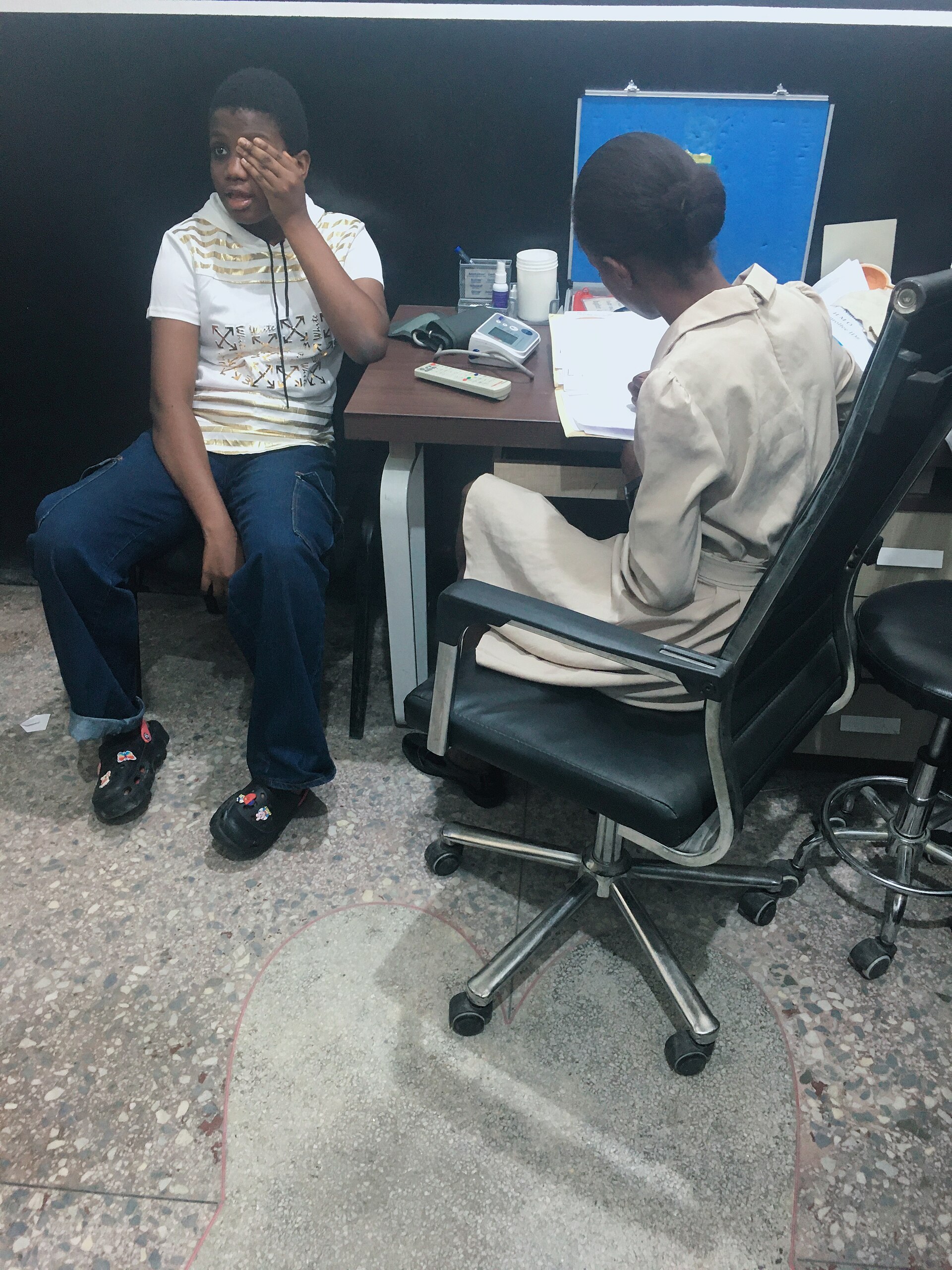
A DOT physical follows a fixed federal format, so it runs the same way whichever certified examiner you see. Here is each stage and what it is actually checking for.
The five stages
Health history, vision, hearing, vital signs, urinalysis, then the hands-on examination. Most drivers are done in under an hour.
1. Health history
You complete a federal health history form covering current conditions, past surgeries, medications and substance use. The examiner reviews it with you and asks follow-up questions.
Answer accurately. The examination that follows will surface most things anyway, and a history that contradicts the findings turns a routine visit into a problem. A well-managed condition backed by documentation is rarely a barrier. An undisclosed one is.
2. Vision
The standard is at least 20/40 in each eye separately and both together, with or without correction. You also need at least 70 degrees of peripheral field in each eye, and the ability to distinguish red, amber and green.
Corrective lenses are fine. Bring them. If you need them to meet the standard, your certificate will note that you must wear them while driving.
3. Hearing
You must perceive a forced whisper at five feet or more in at least one ear. Fail that and an audiometric test is the alternative. Hearing aids are permitted, and as with glasses, the certificate will note the requirement.
4. Blood pressure and pulse
This is the stage that most often changes the outcome, and it changes the length of your certificate rather than passing or failing you outright.
A reading in the normal range supports certification for the full 24 months. Elevated readings shorten it, typically to one year, with closer follow-up required as readings climb. Readings high enough to pose an acute risk result in disqualification until the condition is treated.
Practical consequence: white-coat nerves and a large coffee on the way in can cost you a year of certification. Sit quietly for a few minutes before the reading if you can.
5. Urinalysis
A dipstick test checking specific gravity, protein, blood and sugar. It screens for kidney disease and diabetes, and specific gravity flags dehydration that could skew the other results.
It is not a drug test. A DOT drug screen is a separate, differently regulated test that your employer arranges. The difference is explained here.
6. The physical examination
The examiner works through a standard checklist: general appearance, eyes and ears, mouth and throat, heart, lungs and chest, abdomen and viscera including a hernia check, the vascular system, the spine and musculoskeletal system, and neurological function including reflexes, balance and gait.
The purpose throughout is narrow. Not whether you are in perfect health, but whether anything present could cause sudden incapacity or loss of vehicle control.
Cost and where to go at Maxem Health
Maxem Health charges $100 for a DOT physical, and clinics take walk-ins seven days a week. DOT physicals are excluded from the Discount Program, and employment-related exams are generally not an insurance benefit.
Maxem also handles DOT drug screens, substance abuse screening and MRO services, return-to-work exams and pulmonary function testing.
Frequently asked questions
What should I bring to a DOT physical?
Photo ID, glasses or contacts, hearing aids if you use them, a complete medication list with dosages, and documentation for any managed condition such as a recent A1C, a sleep study with CPAP compliance data, or a specialist’s clearance letter.
Do I have to give a urine sample?
Yes. Urinalysis is a required part of the exam. It screens for kidney problems and diabetes, not for drugs.
Can I fail for being overweight?
Weight alone is not a disqualifier. Related conditions can be. A high BMI may prompt screening for sleep apnoea, and untreated sleep apnoea does affect certification.
How long is the certificate valid?
Up to 24 months. Conditions needing monitoring, most commonly elevated blood pressure, result in a shorter certificate.
Walk in at a Maxem Health clinic
Maxem Health Urgent Care has 15 clinics across Mississippi, Louisiana and Oregon, open seven days a week including holidays. Most clinics run Monday to Saturday 8am to 8pm and Sunday 9am to 6pm, though hours vary by location. Walk in for a DOT physical seven days a week.
Save your spot at your nearest Maxem Health clinic, or find clinic addresses and hours.
Federal medical standards are set by the FMCSA. See the FMCSA medical regulations for the authoritative requirements.
This article is general health information, not medical advice. It does not replace an evaluation by a licensed provider. If you are worried about your symptoms, get seen.